


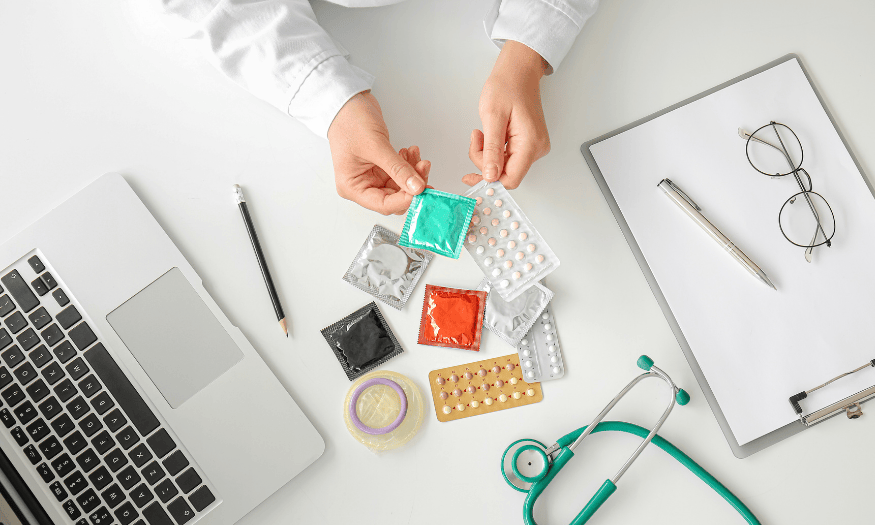
Giving life is a profound act. That is why it must be approached with care, sensitivity, and a thoughtful evaluation of all relevant factors. Giving life matters—but so does ensuring a good quality of life for ourselves and for others. Considering what is at stake, ignorance must not be allowed to prevail. World Contraception Day (WCD) is marked globally every year on 26th September.
Contraception protects life—because, however paradoxical some may try to make it seem, every human being has the right to be born under the best possible conditions: to be wanted, and to have parents who possess sufficient psychological and emotional maturity to raise them in a loving environment with a stable emotional foundation. Moreover, every woman has the right to decide what happens to her body and her future. Being proactive is the best way to safeguard that right, especially considering that abortion is not always socially or religiously accepted, and can place immense psychological pressure on pregnant women.
World Contraception Day is an international campaign that promotes every person’s right to make informed decisions about their sexual and reproductive health, and therefore their lives. The campaign aims to provide accessible and comprehensive information on contraceptive methods. The goal is to ensure that every pregnancy is wanted, and that every baby is truly welcomed as part of a joyful journey.
Launched in 2007, WCD was the initiative of several international organisations in collaboration with the pharmaceutical company Bayer AG. Over the years, the campaign has gained increasing support from health professionals, educators, and local clinics, which have used educational tools such as videos, events, and websites to reach the public.
The campaign’s main target audience is young people, who are most at risk of unwanted pregnancies. Counselling and family planning centres therefore serve as essential points of reference, where individuals can receive guidance on the most suitable method for their needs and life circumstances.
Sexual health is another key dimension of reproductive health
A lack of information about contraceptives can lead not only to unwanted pregnancies but also to a higher risk of contracting sexually transmitted diseases. Unfortunately, this misinformation is often closely tied to individuals’ socio-cultural backgrounds.
In January 2025, a study published in The Lancet Global Health and conducted by researchers at the Johns Hopkins University Bloomberg School of Public Health analysed data from 48 low- and middle-income countries. The study highlighted the progress made in reducing socioeconomic inequalities in the use of modern contraceptives between 1990 and 2020.
The most striking finding was that, in recent decades, there has been significant growth in the use of modern contraceptives (+2.1% per year), but this increase was even more pronounced among economically disadvantaged women (+3.1%), surpassing the rate among wealthier women, which remained stable at 1.3%.
Across all countries analysed, income-related inequalities decreased, with Chad, Mali, and Uganda standing out as notable examples of substantial progress. The percentage of women using contraceptives or requesting their use from partners rose more sharply among the poorest women, at a rate of 1.6% per year, compared to a more modest 0.5% among the wealthiest.
However, despite progress, wealthier women still show higher rates of modern contraceptive use. These figures are confirmed by the United Nations Population Fund (UNFPA), the UN agency committed to strengthening sexual and reproductive health rights and ensuring comprehensive family planning. According to the agency, nearly 257 million women in low- and middle-income countries lack access to modern contraceptives, and the funding gap for these services could reach $1.5 billion by 2030.
Who is afraid of the contraceptive pill?
If we look at Italy and other European countries, it seems that the situation regarding contraception has deteriorated. “The cause is the so-called hormone phobia: younger girls are increasingly reluctant to use hormonal contraceptives due to misinformation circulating online. Influencers have become almost like medical authorities to them”, explains Manuela Farris, a lecturer in gynaecology and midwifery at UniCamillus University. “In Rome, there are family planning centres that provide free contraceptives, yet their use has declined. In 2001, they accounted for 20% of the total, but now that figure has dropped to 13%”.
As for sexually transmitted infections (STIs), the situation appears to be fairly well under control. “The Italian National Institute of Health (Istituto Superiore di Sanità) and its satellite centres are managing the issue effectively. The HPV vaccine is effective, especially the new version that protects against nine strains, and awareness of chlamydia is growing”, says Farris. “Unfortunately, sex education in schools has declined, but reporting and detection of STIs have improved. Young people are reasonably well informed and know they should use condoms, although awareness remains uneven. Since the start of the Covid pandemic, young people have become more conscious of infections, and condom use is often driven more by fear of disease than by fear of unwanted pregnancy”.
There is a lot of fake news out there, and the internet is a breeding ground for it. In theory, it is a tool for unrestricted access to information, but it often turns out to be a platform for self-proclaimed influencers who have neither moral scruples nor factual knowledge. “Girls are afraid of hormonal contraceptives because they hear that they cause weight gain, which is completely false, especially with today’s formulations”, Farris emphasises. “Then there’s the fear related to cancer risk. A video is circulating claiming that the pill is classified as Group 1 by the International Agency for Research on Cancer, but wine and red meat are also in Group 1, so this information needs to be put into proper context. For girls aged 15 to 20, the risk of breast cancer is virtually zero. The increased risk only appears later in life and disappears once the pill is discontinued. Our goal is to educate people that not everything they read online is true, and that they should trust their gynaecologist”.
Unwanted pregnancies and clandestine abortions
Sex education and universal access to modern contraception are essential to prevent unintended pregnancies and protect against sexually transmitted diseases. They are also vital to address a specific risk faced by younger women and those from less privileged socio-cultural backgrounds: clandestine abortions.
Globally, approximately 73 million induced abortions take place each year, nearly half of which (45%) occur under unsafe conditions. This has serious consequences for women’s health, including complications, hospitalisations, and—in the most extreme cases—preventable maternal deaths. Even in Italy, where Law 194/1978 guarantees access to voluntary termination of pregnancy, it is estimated that between 12,000 and 15,000 clandestine abortions still occur each year, with some sources reporting figures as high as 50,000 cases.
Contraception in Italy
World Contraception Day is promoted in Italy by the Italian Society of Gynaecology and Obstetrics (SIGO) and the Italian Society of Contraception (SIC).
SIGO has called for all contraceptives to be made available free of charge through the Italian National Health Service, not just the contraceptive pill. Their main requests include the free distribution of all contraceptives, including long-acting methods such as medicated and copper intrauterine devices and subcutaneous implants, as well as an increase in the number of public clinics, counselling and family planning centres, and more information and education on responsible sexuality.
But what is the current situation of clinics in Italy? “Counselling and family planning centres tend to function better in the north than in the south, and the same goes for contraceptive use”, points out Farris. “Sardinia is an exception, with a well-established gynaecological tradition. In clinics in the south, access is limited, and girls often avoid them out of shame or fear. We need to reach out to them—for example, by organising school days dedicated exclusively to young people. In Florence, the Youth Counselling Centre (Consultorio Giovani) is reserved for young people only, so they don’t have to worry about running into mothers, neighbours, or family friends. We need to better organise the resources available”.
Some counselling and family planning centres in Italy do provide contraceptives free of charge. But this is not standard practice. “Tuscany and Emilia, for example, offer a wider range of options than Rome, including pills, patches, rings, coils, and subcutaneous implants”, continues our expert.
However, condoms remain the most popular form of contraception in Italy. “Condoms top the sales charts, followed by the pill. The ring is becoming more popular, but the patch is not. Intrauterine devices account for around 2–4% of sales. On the other hand, sales of emergency contraception are increasing exponentially. However, it is best to avoid relying on it, because the morning-after pill is only 98% effective, leaving a 2% chance of unintended pregnancy”, Farris explains.
What can be done from a social and institutional perspective? World Contraception Day 2025 is inviting people to participate in webinars, workshops, and community events focused on contraception. It is also encouraging people to raise awareness on social media, support local clinics through volunteering or donations, and start conversations about contraception and safe sexual health with friends and family. “We need to talk more about contraception, which has been a liberation for women. It is no longer the revolutionary issue it was in the 1970s, and unfortunately, people are becoming complacent. The internet can be a useful tool, but young women often trust influencers more than official sources of information. It’s important to use the internet wisely”, concludes the expert.
In connection with World Contraception Day, we would like to highlight today’s free webinar on the topic, organised by the European Society for Contraception and Reproductive Health, entitled ‘Breaking barriers, building bridges: Contraceptive access for all’. For more information, please visit this page.