Heart health is a key factor in our longevity and in maintaining an excellent quality of life. When it comes to exercise aimed at cardiovascular prevention, we often face a classic dilemma: is it better to focus on aerobic activity or opt for weight training?
For many years, cardio training was considered the only effective way to support heart health, whilst weight training was viewed merely as a means of improving physical appearance. Today, scientific evidence paints a more complex picture: both endurance activity and muscle contraction against resistance play crucial and complementary roles in cardiovascular wellbeing.
Let’s analyse in detail how our cardiovascular system responds to different athletic stimuli and what the ideal strategy is for combining cardio and strength training.
Is it better to do weight training or cardio?
“For years, cardio and strength training have been regarded as two alternative approaches”, says Professor Stefano Palermi, Lecturer in Musculoskeletal Disorders on the MSc in Medicine and Surgery at UniCamillus. “Today, however, scientific evidence shows that they are two complementary components of a healthy lifestyle: the heart benefits from both, provided the exercise is personalised and practised regularly”. There is therefore no single form of exercise that is categorically ‘better’ in absolute terms, as cardio and strength training act on different but equally vital physiological mechanisms.
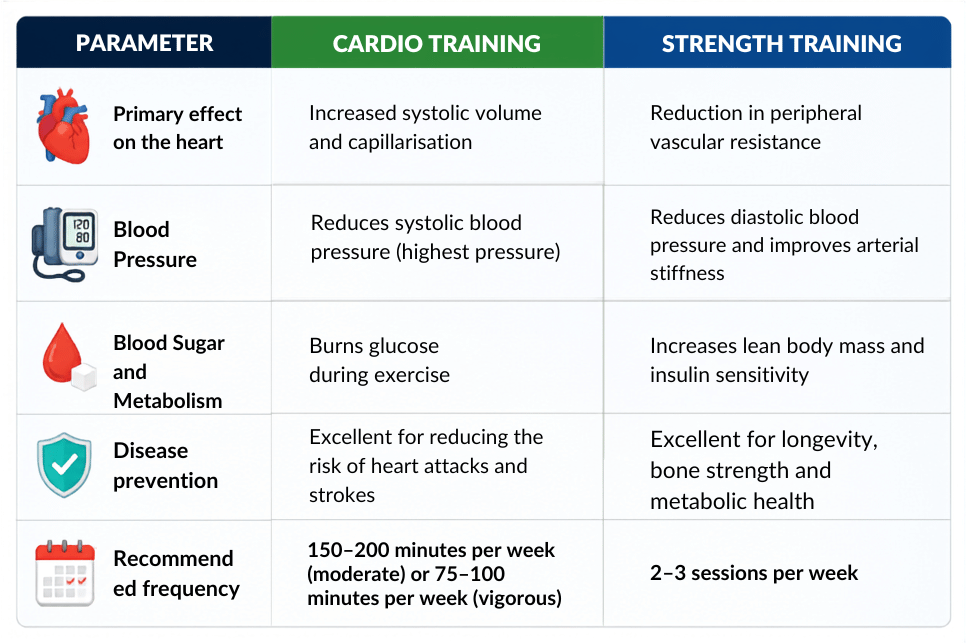
Aerobic exercise makes the heart work like a pump over the long term: it increases stroke volume, improves tissue capillarisation and reduces resting heart rate.
Strength training, on the other hand, increases muscle mass, improves insulin sensitivity and helps to control blood pressure and the main cardiovascular risk factors.
If the main aim is maximum protection against conditions such as heart attacks and strokes, combining aerobic exercise with strength training is the most effective approach.
Is cardio good for the heart?
Absolutely. Cardio fitness brings about extraordinary physiological adaptations in the heart muscle and the blood circulation. Regular cardio exercise helps to:
- Reduce high blood pressure: aerobic exercise makes the artery walls more elastic and promotes vasodilation;
- Improve your lipid profile, in particular by increasing HDL (or ‘good’ cholesterol) and helping to control triglyceride levels;
- Improve the heart’s efficiency, increasing the volume of blood pumped with each beat and gradually reducing your resting heart rate.
Among the most popular forms are running, swimming, cycling and cardio Pilates classes, which are ideal for those looking for a low‑impact activity on the joints without sacrificing the benefits for the circulatory system.
Is weight training good for the heart?
For decades, there were concerns that weight training might place excessive strain on the heart muscle. Modern studies have, however, shown that strength training is an exceptional tool for heart health.
When performing multi‑joint exercises, such as barbell squats or dumbbell shoulder exercises, a large amount of muscle tissue is stimulated. This generates direct cardiovascular benefits:
- Reduction of resting blood pressure. Strength training, when practised regularly, improves endothelial function;
- Control of visceral fat. Abdominal adipose tissue produces inflammatory substances that are harmful to the arteries, and strength training helps reduce it effectively;
- Better metabolic management. Increasing lean mass helps keep overall metabolic parameters under control.
A well‑structured gym training programme improves vascular function and helps to manage risk factors.
Which sport is best for the heart?
“There is no single ideal sport for the heart that suits everyone”, explains Professor Palermi. “The best exercise is the one you can continue to do over the years, adapting it to your age, medical condition and health goals”.
Among the sporting activities with the greatest positive impact on the heart are:
- Cycling and swimming, which are excellent forms of prolonged aerobic exercise that do not put strain on the joints;
- Brisk walking and Nordic walking, accessible to everyone and perfect for daily consistency;
- Rowing and cross‑country skiing, which simultaneously engage cardiac endurance and the strength of most muscle groups.
The key to success remains consistency over time: the best sport is the one you can practise regularly and enjoy.
Which sport helps lower blood sugar?
For controlling and reducing blood sugar levels, weight training combined with cardio offers the perfect combination.
Muscles are the body’s main ‘storage sites’ for glucose. Performing resistance exercises such as barbell squats or dumbbell presses stimulates the uptake of glucose into muscle cells, improving insulin sensitivity. At the same time, prolonged aerobic activity depletes glycogen stores, playing a crucial role in preventing or managing type 2 diabetes and protecting blood vessels from the damage caused by hyperglycaemia.
Is too much cardio bad for the heart?
Available evidence suggests that extremely high volumes of endurance training, maintained over many years, may be associated with certain cardiac changes and an increased risk of arrhythmias in predisposed individuals.
However, these scenarios affect only a small minority of athletes and should not discourage the general population: for almost everyone, regular aerobic exercise is one of the most effective means of cardiovascular prevention. “In clinical practice, the problem is almost always the opposite: people do too little exercise, not too much. Achieving the levels of exercise recommended by the guidelines is in itself a goal that can significantly reduce cardiovascular risk”, reassures Palermi.
Therefore, for the general population and for those seeking good health and longevity, moderate and well‑structured sessions of cardio training are not dangerous in any way—only beneficial.
Is it good to do cardio every day?
Being active every day is good for you, but the frequency of structured cardio training depends on the intensity. The guidelines recommend at least 150–300 minutes of moderate‑intensity aerobic activity or 75–150 minutes of vigorous‑intensity activity each week, combined with at least two strength‑training sessions.
Can people with heart problems do sport?
Yes, in the vast majority of cases, physical exercise is a genuine form of medicine prescribed as part of cardiac rehabilitation programmes. People who have suffered from heart conditions, had a heart attack or have high blood pressure not only can, but should, exercise, following specific guidelines.
- Pre‑exercise medical assessment: before starting any gym training, it is essential and advisable to undergo a specialist medical assessment to determine the most appropriate type and intensity of activity;
- Personalised training load: alternate controlled aerobic exercise with weight training (using light or moderate weights), avoiding prolonged isometric efforts (such as holding your breath whilst lifting);
- Gradual progression: increase duration and intensity only under supervision or by following the specialist’s advice.
The ideal strategy for cardiovascular wellbeing
To best protect your heart, you don’t need to choose between cardio and strength training. The winning formula for cardiovascular prevention and longevity is integration:
- 75–150 minutes a week of aerobic activity (walking, running, cardio fitness, cycling);
- Include 2–3 strength‑training sessions a week with a full‑body circuit (squats, pull‑ups, dumbbell shoulder exercises).
“Cardiovascular prevention is not achieved by choosing between cardio and strength training, but by integrating both into an active lifestyle. The combination of aerobic activity, strength training and consistency over time is now one of the most effective strategies for protecting the heart and promoting healthy ageing”, concludes the expert.