


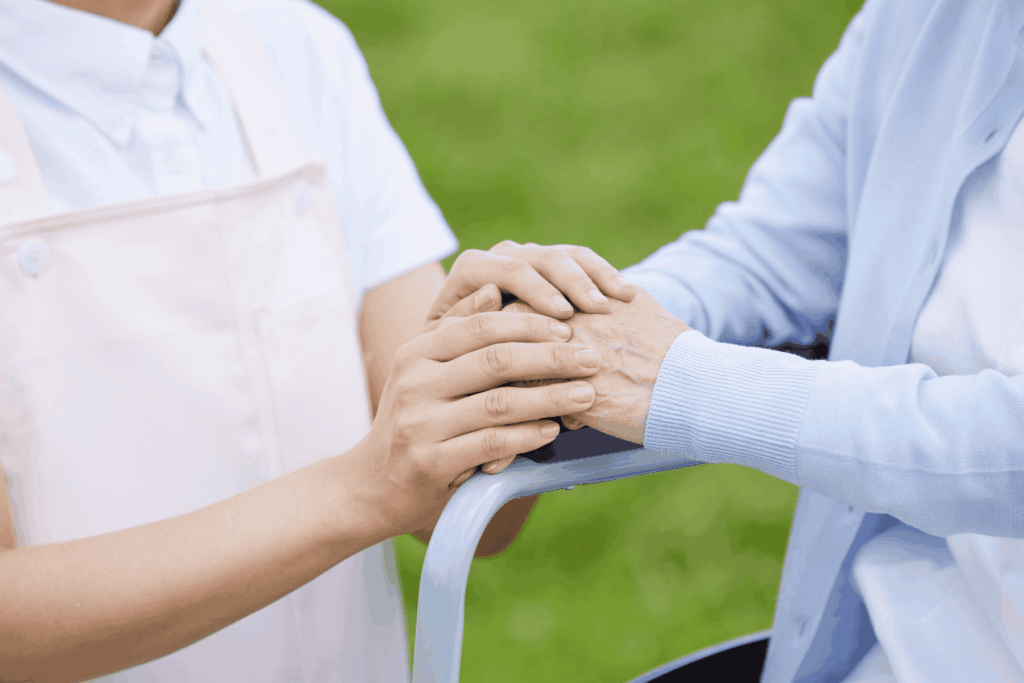
Integrated home care is now a vital part of Italy’s local healthcare system. It enables personalised care to be delivered directly to patients’ homes, with a particular focus on frail older people. It combines healthcare, rehabilitation and social care interventions. This approach improves clinical outcomes, reduces the risk of unnecessary hospital admissions, and helps to maintain independence and quality of life.
Professor Fabio D’Agostino, Head of the BSc in Nursing programme at UniCamillus University, and Professor Noemi Giannetta, Programme Director of the same programme, provided the scientific advice for this text.
What is integrated home care, and why is it important?
Within the Italian healthcare system, home care has been progressively strengthened by local healthcare reforms aimed at shifting part of the care from hospitals to the local community and patients’ homes.
“According to Ministerial Decree 77/2022, home care is now a cornerstone of our local healthcare system”, says Professor Giannetta. “It is organised as ‘home care’ to provide integrated and personalised care directly in the patient’s home, with the home being prioritised as the primary setting for care for conditions requiring low, medium or high levels of care complexity”.
Home care involves a variety of professional roles. It is based on the work of a multidisciplinary team comprising general practitioners (GPs), home nurses, physiotherapists, social workers, healthcare workers and specialists. A coordinator, often the family nurse or GP, is responsible for coordinating activities, managing the individualised care plan and ensuring continuity of care 24 hours a day. “The coordinator, in turn, shares multidimensional assessments via digital platforms, community centres and local operations centres”, adds Professor D’Agostino.
What does integrated home care cover?
It addresses chronic frailty, lack of self-sufficiency and multiple conditions.
It includes:
• wound care
• administering infusion therapies
• ventilation
• monitoring vital signs
• rehabilitation interventions
• mobility support
• home physiotherapy
• medication management
• support with daily activities such as personal hygiene and nutrition
• home diagnostic services (sample collection, ECGs)
• palliative care for end-of-life care
Why home care is essential for older people?
With over 14 million people aged over 65 in Italy, home care enables the management of chronic conditions without overburdening hospitals. “Italy is one of the oldest countries in Europe, with many people over 65 living with multiple chronic conditions that require continuous care rather than hospital admissions”, explains Professor D’Agostino. “This is why the home is often the most suitable place to care for patients, stabilise their condition and reduce unnecessary hospital admissions”. This model therefore allows for a more efficient use of healthcare system resources.
A key consideration is the quality of life for older people. “Staying in one’s own home reduces the stress associated with moving and helps maintain family and social ties”, D’Agostino continues. “Thanks to the home environment, older people retain a sense of security and comfort that is hard to find in a hospital”, echoes Professor Giannetta.
The role of home care nurses
Among the key professionals involved in home care are family and community nurses, who support patients in their own living environment and contribute to the ongoing management of their care.
“The home care nurse helps maintain the elderly person’s independence and quality of life by providing proactive, personalised care that combines clinical treatment, education and psychosocial support within the family setting”, explains Professor Giannetta.
Their intervention is tailored to the patient’s remaining abilities and includes assessing daily activities, developing individualised care plans and providing health education.
“This approach helps prevent functional decline and promotes recovery rates up to 30–40% higher than in institutional settings”, emphasises Professor D’Agostino. “But a key aspect is also supporting the family, because educating the caregiver is essential: it prevents potential errors and increases the elderly person’s independence”.
Access to and cost of services
Access to home care may be free or may require a co-payment, depending on the criteria established by the Italian National Health Service and the resources available at local level.
When is home care for the elderly free, and when is it not?
“In Italy, home care is free when it falls within the services provided by the National Health Service, such as Integrated Home Care delivered by district health authorities (ASLs) for people who are not self-sufficient, as certified by their GP or by the Multidimensional Assessment Unit. In these cases, healthcare services such as nursing, rehabilitation and palliative care are covered without a co-payment for those with a civil disability of 67% or more, a low ISEE, Italy’s means-testing indicator for household income and assets, or who fall into exempt categories, for example in cases of multiple chronic conditions or protected discharges, as set out in Ministerial Decree 77/2022”, says Professor Giannetta.
“Home care becomes partially free or subject to a fee when it exceeds the standards set by the National Health Service. This is the case, for example, with additional hours provided by social and healthcare workers or caregivers, or with domestic services or non-medical social care”, adds Professor D’Agostino.
In such situations, the costs may be covered by local authorities with a co-payment based on the means-testing indicator ISEE, or they may be covered privately through cooperatives or associations, with average rates of between €20 and €40 per hour.
Professor D’Agostino also highlights a number of financial support measures introduced in recent years. “These include the INPS Universal Benefit for very frail people over the age of 80, which can amount to up to €1,381 per month for those with an ISEE of €6,000 or less. This benefit is an alternative to the carer’s allowance and can be used to hire professional caregivers or pay for social care services in the most serious cases. The 2026 Budget Law has also established minimum standards for social home care, such as one free hour per week. However, without additional resources, there is a risk of maintaining significant disparities between regions”, he notes.
What is the process from referral to service activation?
It begins with a referral, which may come from a GP, hospital or family. This is followed by a multidimensional assessment carried out by a multidisciplinary team comprising doctors, nurses and social workers. “This phase allows us to draw up an individualised care plan tailored to the patient’s specific needs”, D’Agostino explains.
Training and quality
Training forms the foundation of professional skills in home care, ensuring effective and safe care. “A university education is essential for maintaining high standards in home care, as it provides the theoretical, methodological and clinical foundations on which safe and effective practices can be built”, says Giannetta.
However, according to Professor D’Agostino, academic training must be complemented by practical training and specialist programmes. “It is essential to complement university education with targeted local training programmes, structured internships and specialist master’s degrees for roles such as the family and community nurse”.
Challenges and future perspectives
Despite the growing importance of home care within the healthcare system, the sector still faces a number of organisational and professional challenges.
“To strengthen the role of home care nurses in the coming years, concrete action is needed at multiple levels, not just declarations of principle”, explains Professor Giannetta. Priorities include a clear definition of competencies, stable organisational models, targeted training, and greater integration between health and social services.
Professor D’Agostino also emphasises the importance of professional and financial recognition. “Without adequate remuneration and contractual recognition, home care will continue to be perceived as a fallback option rather than a qualifying professional field”.
Professor Fabio D’Agostino lectures in all three years of the BSc in Nursing.
Professor Noemi Giannetta lectures in the third year of the BSc in Nursing and in the first year of the BSc in Midwifery.