


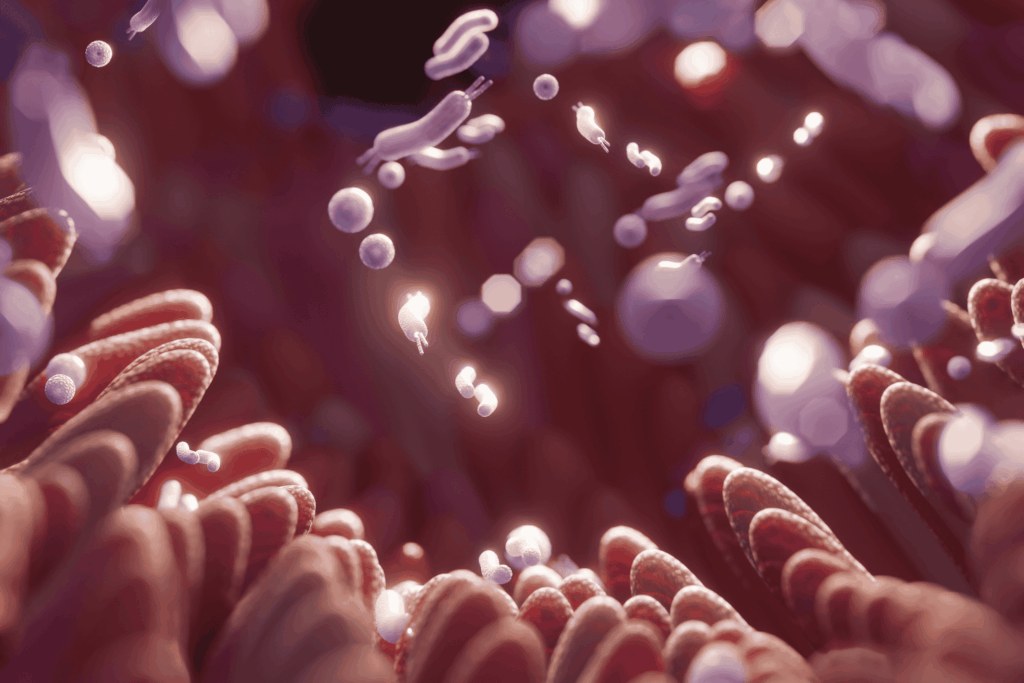
You have a brain in your gut. No, that’s not an insult — it’s simply the truth! You probably thought your intestines were ‘just’ an organ of the digestive system. But they aren’t! In recent years, there has been a lot of talk about the gut being a ‘second brain’.
What does this mean? The answer lies in the close communication between the gut and the brain, now known as the ‘gut-brain axis’. Inside our gut, there is a real autonomic nervous system called the enteric nervous system, which has a network of neurons similar to that in the brain.
This has many implications for our mental health and immune system, as well as for health problems that, at first glance, would not seem to be directly related to digestion. The opposite is also true: emotional or physical problems can affect the gut. The gut-brain axis means there is a two-way connection between these two organs.
A healthy microbiota makes us more resistant to infections
The gut is said to be in perfect health when its microbiota is balanced. Veronica Ojetti, a lecturer in internal medicine at UniCamillus University, explains that “around 1.5 kg of bacteria, known as the gut microbiota, live in the gut. But the microbiota is not isolated. It is protected by a layer of mucus and an intestinal barrier that separates the intestinal contents from the blood vessels, the enteric nervous system and part of the immune system closely linked to intestinal bacteria”.
Therefore, a balanced microbiota is essential for an effective immune system. As our expert explains, when we ingest pathogens, the microbiota produces molecules and signals that help the immune system defend us. In this sense, the gut acts as an ‘interface’ between the external environment and our immune defence. So, as long as the microbiota is balanced, there are no problems. But what happens when an imbalance occurs? “An imbalance in the gut microbiota is known as ‘dysbiosis’, and occurs when certain bacterial species grow more than others. This causes a decline in the ‘good’ bacteria, which produce anti-inflammatory substances, and an inflammatory state develops”, explains Ojetti. This mechanism is responsible for certain autoimmune diseases, such as rheumatoid arthritis, as well as chronic inflammatory bowel diseases such as Crohn’s disease and ulcerative colitis. In these cases, the intestine becomes a veritable ‘battlefield’: the immune system’s cells no longer recognise the intestine and attack it, causing ulcers and tissue damage. Scientific studies have shown that these processes are closely related to an altered microbiota in genetically predisposed individuals”.
In cases of rheumatoid arthritis, Crohn’s disease and ulcerative colitis, it is not enough to treat the condition by regulating the microbiota once the body’s autoimmune response has been triggered: specific medications must also be used. However, maintaining good bacterial flora is essential for preventing these conditions and avoiding recurrence.
A healthy gut can make you happy, too!
Feeling good physically can also improve your mood. However, it’s not just a simple cause-and-effect relationship. For example, did you know that 90% of serotonin, also known as the ‘happiness hormone’, is produced in the gut?
“The enteric nervous system produces neurotransmitters such as serotonin (the ‘happiness hormone’) and dopamine (the ‘relaxation hormone’). This means that our gut not only digests food, but also communicates with the brain and can influence our mood. For example, part of the sense of well-being we feel when we eat chocolate comes from this connection”, says Ojetti.
In turn, the brain can also have a positive or negative influence on the gut microbiota. Have you ever had to rush to the bathroom because you were anxious? That’s exactly what we’re talking about! “When you are agitated, you often need to go to the bathroom because your bowels are ‘moving’. Anxiety is known to cause diarrhoea, and there is a connection between anxiety, depression, and the central nervous system. The disease that best represents this connection is irritable bowel syndrome (IBS)”, adds Ojetti. People with IBS experience abdominal pain, bloating and flatulence, and the pain and spasms intensify during periods of stress, when a lot of cortisol is released.
What are the symptoms of intestinal dysbiosis?
Intestinal dysbiosis is an imbalance in the microbiota. This imbalance does not only manifest itself through obvious symptoms such as bloating, irritable bowel syndrome or flatulence; it can also have repercussions for the whole body, contributing to metabolic, neurological and dermatological disorders. “Alterations in the intestinal microbiota are related to conditions such as fatty liver disease, metabolic syndrome, diabetes and obesity. But that’s not all; recent studies also highlight links with Parkinson’s disease, autism, and skin problems such as atopic dermatitis and psoriasis”, the expert continues.
Dysbiosis can also affect the urinary tract: when the intestinal barrier does not function properly, certain bacteria can migrate from the intestinal flora to the bladder, causing recurrent cystitis. “Cystitis is treated with antibiotics, but to prevent recurrence, it is essential to maintain a balanced microbiota. Taking care of the gut also means protecting other systems in the body”.
Gut microbiota health: which foods to eat and which to avoid, and the role of probiotics and prebiotics
What you eat plays a fundamental role in maintaining the balance of your gut microbiota. The Mediterranean diet is among the most recommended, being rich in fibre, whole grains, fruit, legumes, vegetables, yoghurt, kefir and dried fruit. “A predominantly plant-based diet rich in fibre helps you to live better and for longer. Fibre promotes the growth of good bacteria, maintaining the balance of the gut microbiota”, explains Veronica Ojetti. Conversely, ultra-processed foods, junk food and foods rich in refined sugars can alter this balance, promoting bacteria that produce gas and inflammation and causing symptoms such as bloating and a tense stomach. “A proper Mediterranean diet maintains good intestinal flora, preventing disorders related to dysbiosis”.
As well as diet, probiotics and prebiotics can support the microbiota, but they must be chosen carefully.
Probiotics are beneficial live bacteria, such as lactobacilli and bifidobacteria, that increase the proportion of ‘good’ bacteria in the gut. “However, not all probiotics on the market are effective. In order to be effective, they must survive passage through the stomach, arrive alive in the gut, and establish themselves in adequate concentrations. Different strains have different applications: certain lactobacilli are used to treat certain diseases, while others are used to treat different diseases. You should always consult your GP about which probiotic is right for you”, explains our expert.
The duration of treatment is also important. To modulate the microbiota correctly, prolonged cycles are required, ranging from seven to ten days for diarrhoea to three months for chronic conditions such as Crohn’s disease.
Prebiotics, on the other hand, do not contain live bacteria, but indigestible substances that feed the ‘good’ bacteria and promote their multiplication. Combinations of probiotics and prebiotics are often found on the market to maximise the beneficial effect on the microbiota. “Properly integrating probiotics and prebiotics, along with a balanced, fibre-rich diet, is one of the most effective ways to keep our gut healthy and prevent digestive and systemic disorders”, Ojetti emphasises.
Debunking the myths of detox diets and fasting
Many people rely on detox diets or prolonged fasting, thinking that they will ‘clean’ the gut and improve the microbiota. However, these practices are neither natural nor effective in promoting gut health.
“I don’t like them at all! Detox diets consist of eating only smoothies or mashed foods, so you lose the act of chewing and the pleasure of eating. I don’t recommend them to any of my patients”, says Veronica Ojetti.
Prolonged fasting can also be harmful as it increases intestinal permeability and disrupts the balance of the microbiota. “You don’t have to fast but to learn to eat well. A diet rich in fibre, fresh fruit and vegetables, and plenty of water, with few fatty or processed foods, is better. Physical activity helps stimulate the production of good bacteria and intestinal motility. Taking probiotic and prebiotic supplements can be helpful, but antibiotics should only be used when necessary because they damage the microbiota”, concludes Ojetti.