


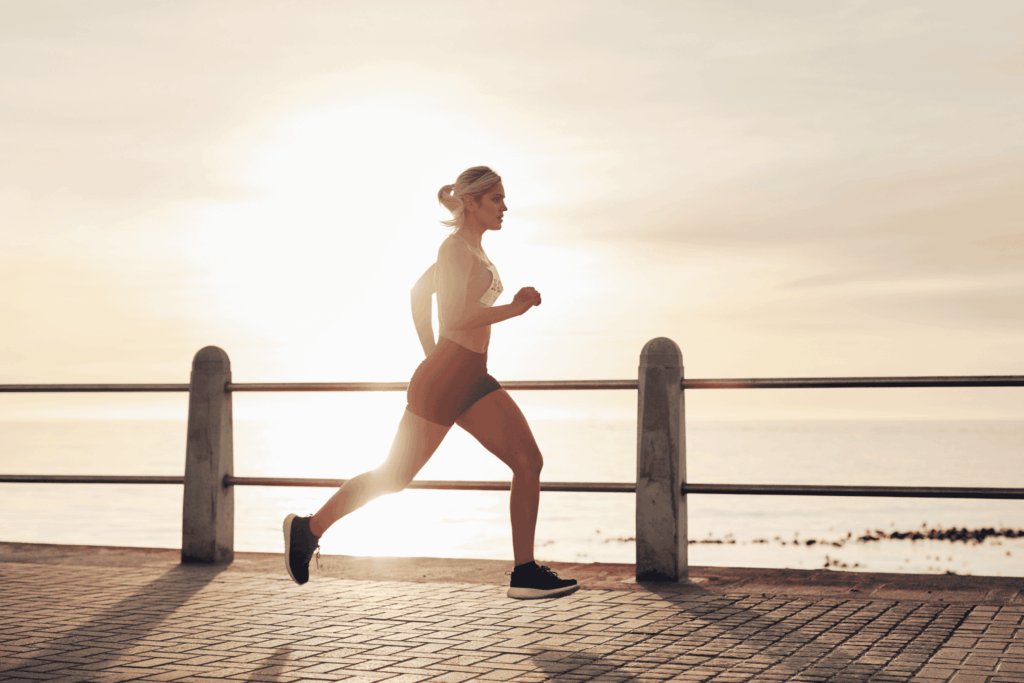
Training in the summer? Some people, especially when it’s hot, decide to start taking care of their physical appearance by embarking on improvised sports sessions in an attempt to achieve the long-awaited and dreaded ‘beach body’. Others prefer to wait until September, while those committed to training all year round don’t miss a single repetition or session of their workout. So, who is right? Obviously, none of them. Training is a lifestyle that should be maintained all year round, but some caution should be taken when temperatures become unbearably high. In fact, training in extreme weather conditions can be dangerous, especially if the right precautions are not taken.
“Training in summer, especially in hot and humid environments, significantly increases the physiological strain on the body”, explains Stefano Palermi, a sports doctor and lecturer in Musculoskeletal Diseases at UniCamillus University. “The body struggles to dissipate the heat produced by the muscles, which can lead to various exertion-induced heat-related illnesses, ranging from cramping to heatstroke—a potentially fatal condition in which body temperature rises above 40°C, accompanied by neurological changes such as confusion, loss of consciousness and abnormal behaviour “.
What are the consequences? Not only health problems, but also a noticeable drop in performance: “Heart rate and fatigue increase, while aerobic endurance, strength and technical precision decrease”.
When should you avoid physical activity? Watch out for the ‘WBGT’ index!
Looking at a thermometer is not enough. When deciding whether and how to train, it is essential to monitor the so called WBGT (Wet-Bulb Globe Temperature) index, which takes into account temperature, humidity, wind, and solar radiation. A WBGT value above 28°C is considered high risk, so you should reduce the intensity of your training or avoid it altogether. You can download free apps to measure WBGT.
What about times of day? “Absolutely avoid the hours between 11am and 5pm, when the sun is at its strongest”.
Hydration is important before, during and after training
In hot weather, your water requirements change radically. “In summer, you lose much more sodium and water through sweat, so it is essential to hydrate strategically. Before physical activity, I recommend drinking 5–7 ml/kg of water about four hours beforehand. During activity, drink 150–250 ml every 15–20 minutes. Afterwards, replenish at least 150% of the fluids lost by weighing yourself before and after activity”. For activities lasting more than 60–90 minutes, experts recommend drinking isotonic drinks containing sodium and carbohydrates.
Technical clothing and gradual acclimatisation
Appropriate clothing is also important for reducing risks. “It is best to wear breathable, light-coloured, lightweight fabrics that facilitate sweat evaporation. It is also useful to adapt to the heat gradually by increasing the duration and intensity of training sessions over time. Ideally, there should be an acclimatisation period of at least two weeks”.
Another useful tip is to use pre-cooling strategies, such as drinking cold drinks or wearing an ice vest before exercise.
Saline supplements are useful, but should be used with caution
This can be useful for those who sweat a lot or do long-duration sports. “Isotonic drinks or oral rehydration solutions (ORS) help replenish sodium and potassium, promoting effective rehydration and preventing hyponatraemia (i.e. the dilution of sodium due to excess water). However, be careful with ‘do-it-yourself’ solutions: supplementation must be personalised, for example through sweat tests or pre- and post-exercise assessments”.
Dehydration: symptoms you shouldn’t ignore
Dehydration is a silent threat. “It’s not just thirst but a progressive condition that can present with symptoms such as a dry mouth, low urine output, concentrated urine, headaches, dizziness, irritability, and loss of concentration”. It gets worse quickly if ignored. Consequences include an increased heart rate and body temperature, decreased performance, and an increased risk of injury. So, how can you tell if you are dehydrated? Palermi recommends a simple method: check the colour of your urine in the morning. “It should be clear!”
Medications and thermoregulation
Some medications can interfere with the body’s ability to adapt to heat. “Diuretics, beta-blockers, anticholinergics and antipsychotics can alter sweating or cardiovascular response. This is why a sports medical evaluation is essential before engaging in physical activity in summer”.
Is it dehydration or heatstroke? How can you recognise the difference?
Knowing the warning signs that distinguish between the two can make all the difference. “If you experience intense thirst, dizziness, cramping or reduced sweating during physical activity, you should stop immediately, find shade and start rehydrating slowly. In this case, it is dehydration. If, on the other hand, you notice red, hot skin, mental confusion, difficulty speaking or loss of consciousness, it could be exertion-induced heatstroke“.
In the case of heatstroke, there is no time to waste. “Call the emergency number (118 in Italy) immediately, and start cooling down by taking a cold bath or shower or applying ice and wet towels to the body. The rule is clear: cool down first, then transport“. In these situations, every minute counts.
Post-workout recovery is a fundamental step
Post-workout recovery also requires attention. “After exercising in hot conditions, it is essential to move to a cool environment and replenish fluids and salts. Fruit and vegetables that are high in water and minerals, such as watermelon, melon, bananas, avocados and cucumbers, can be very helpful. A cool shower, good hydration and adequate rest will help to normalise body temperature”.
Palermi concludes with some valuable, yet simple, advice that should never be taken for granted: “Summer training is possible and beneficial, but you need to be smart about it. Listen to your body, adapt gradually, and if possible, exercise during the coolest hours of the day to ensure complete safety”.