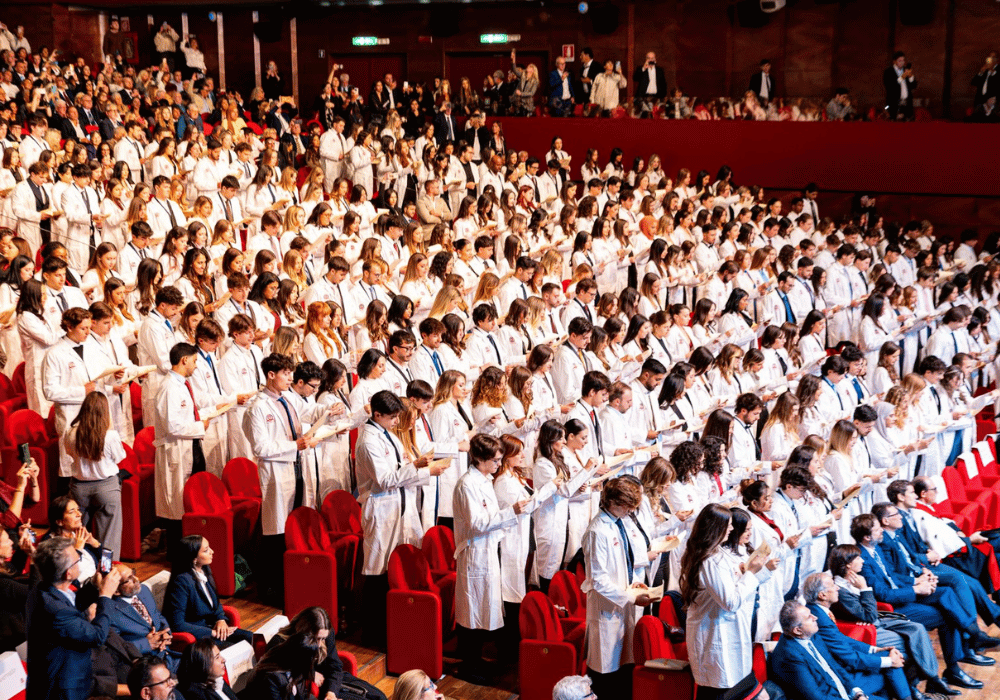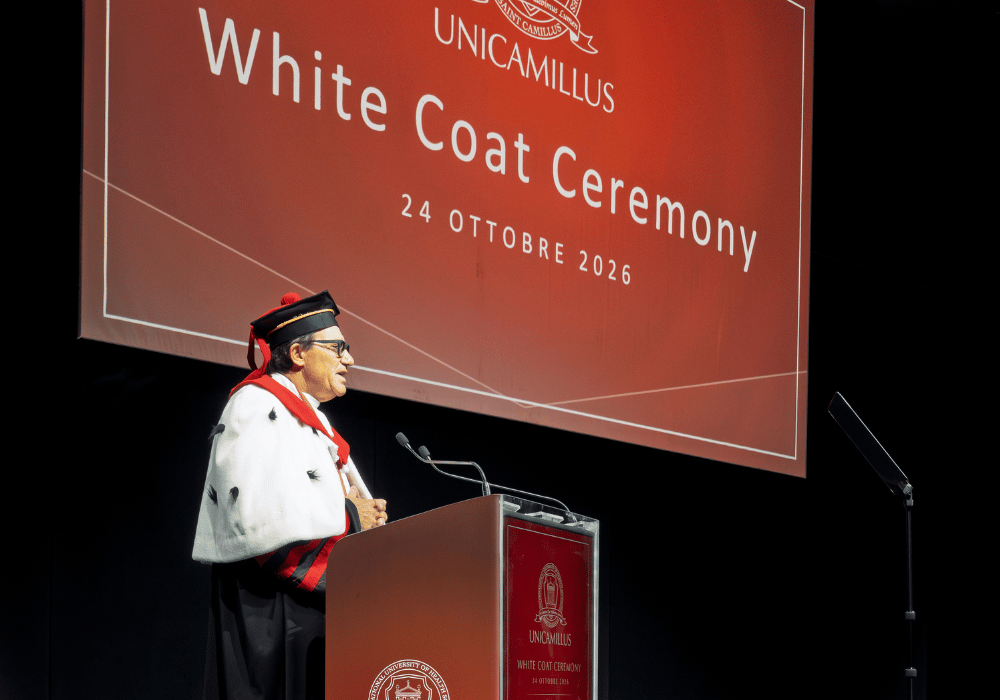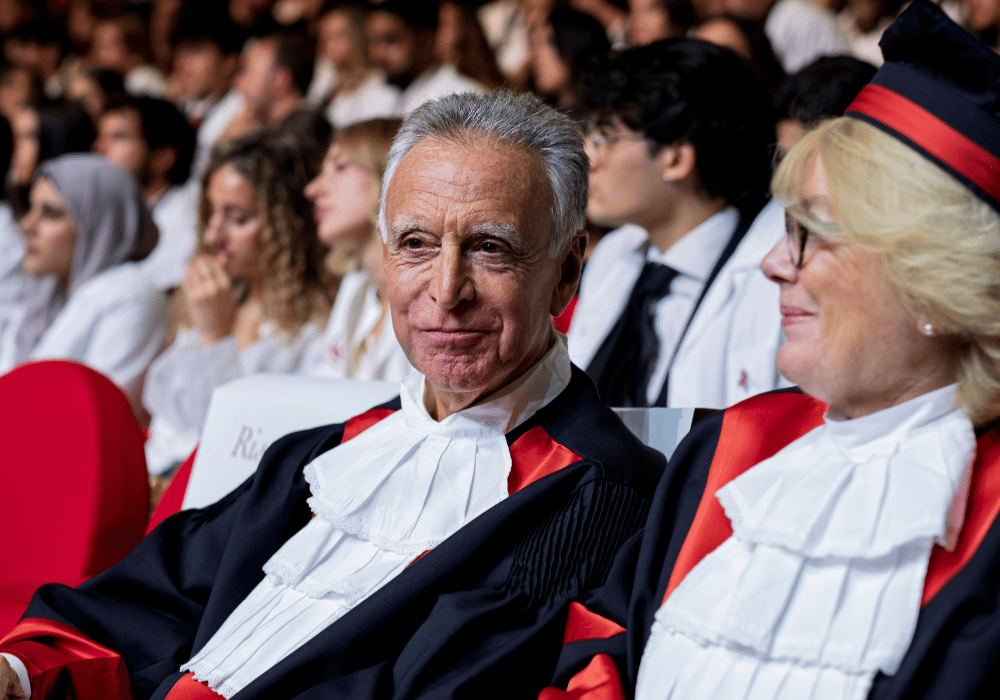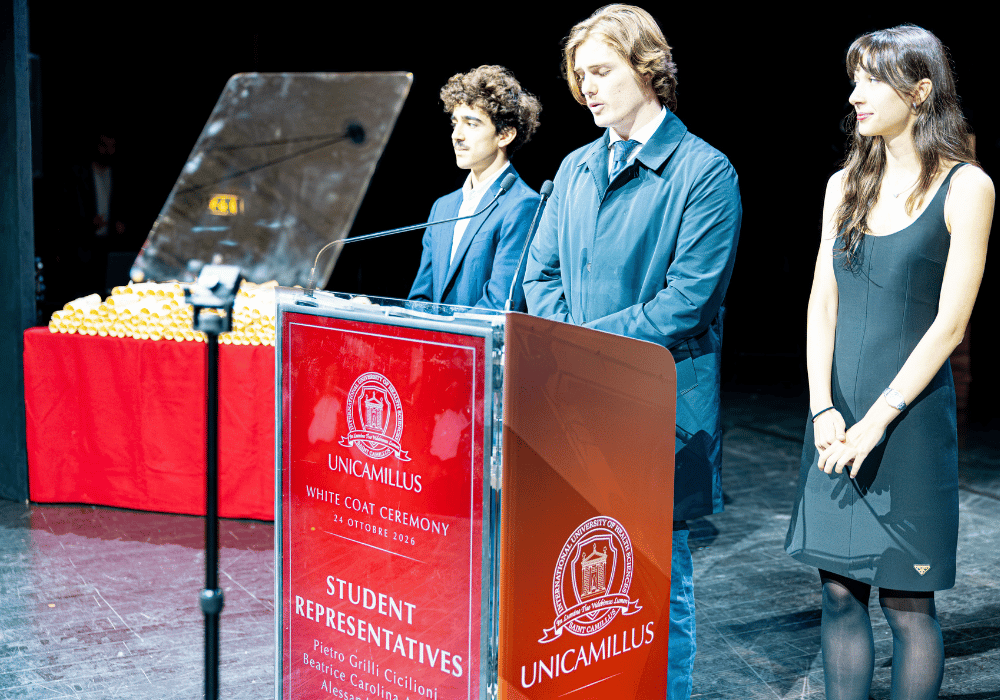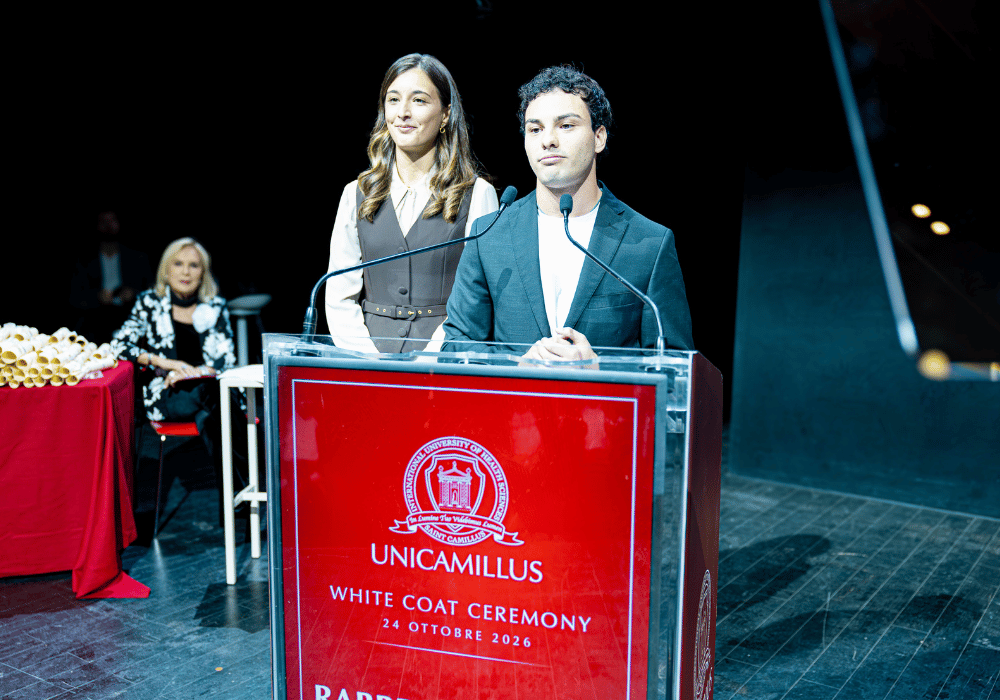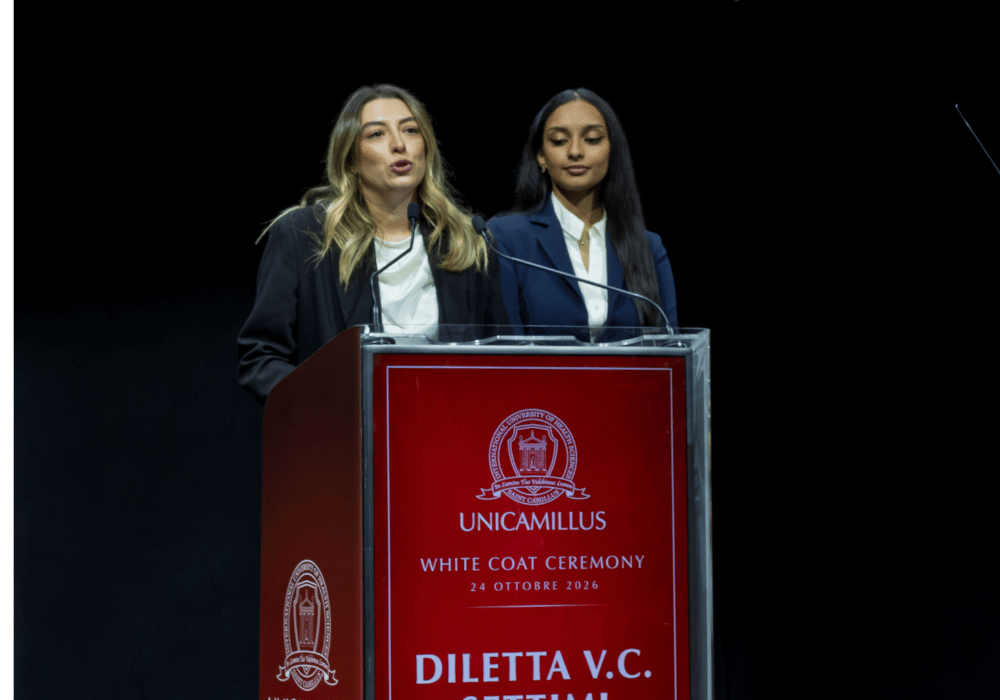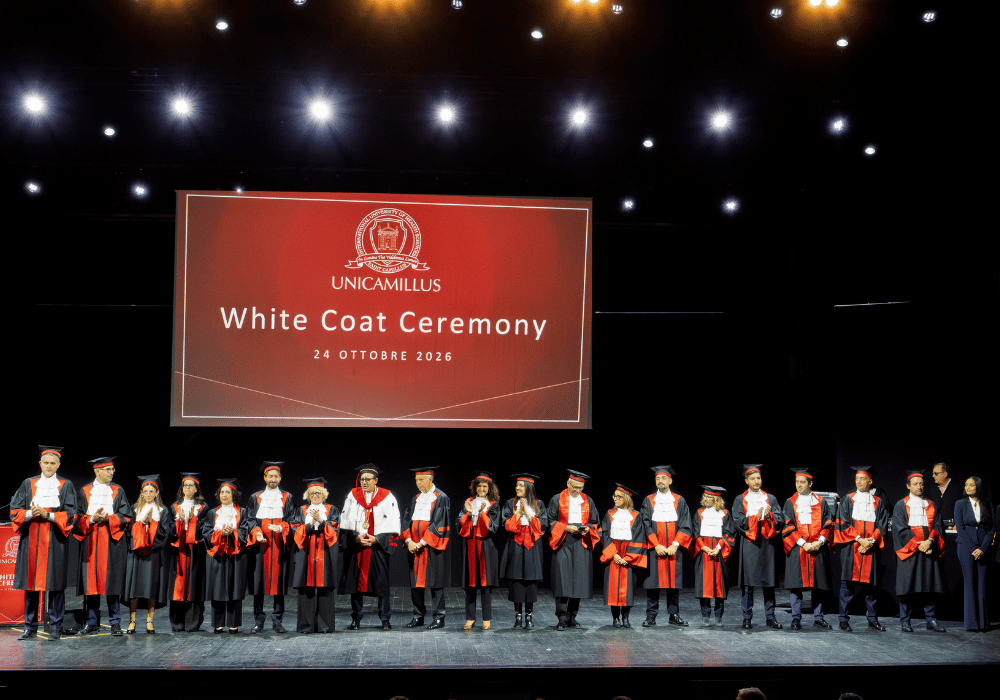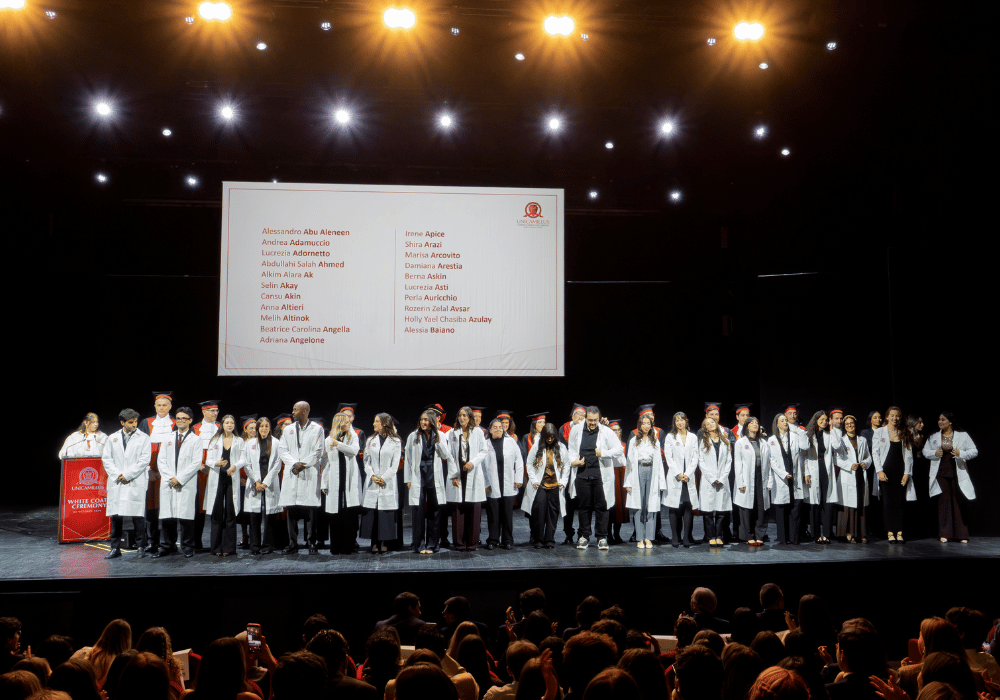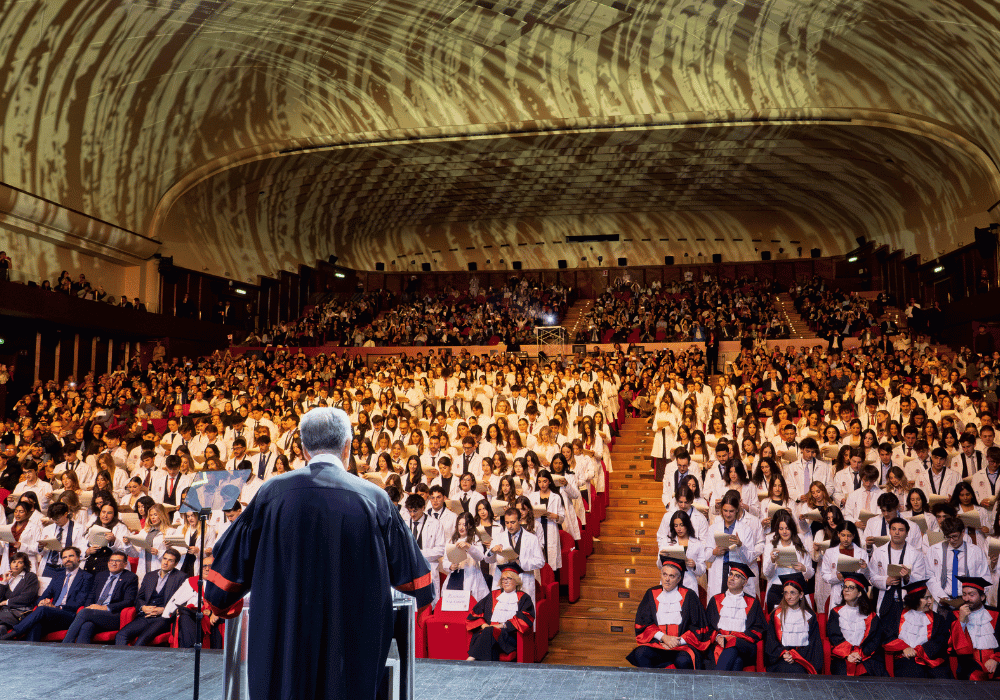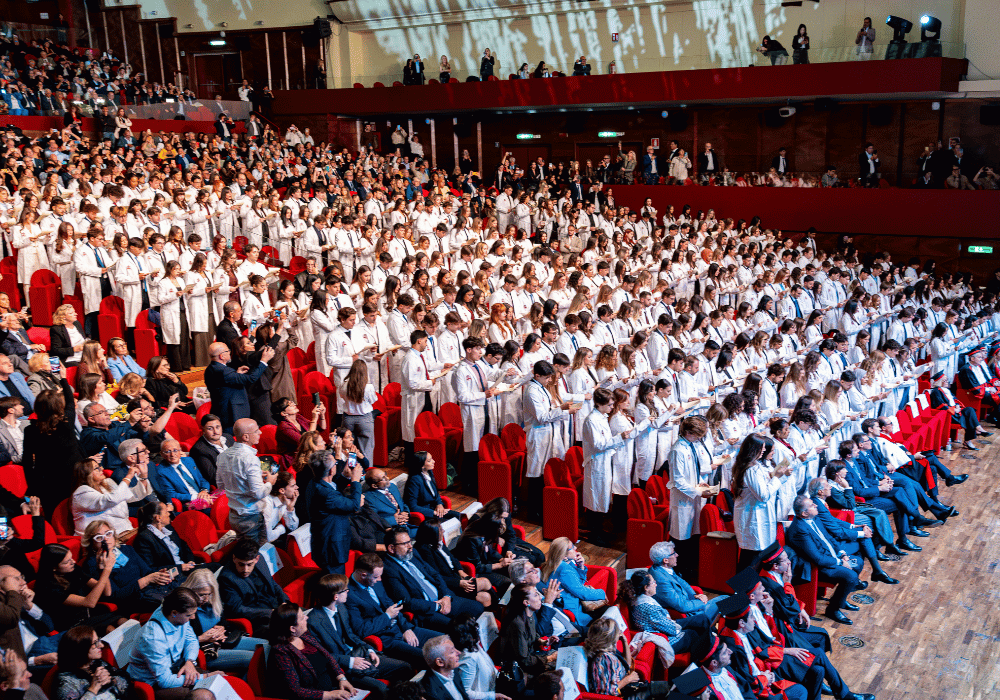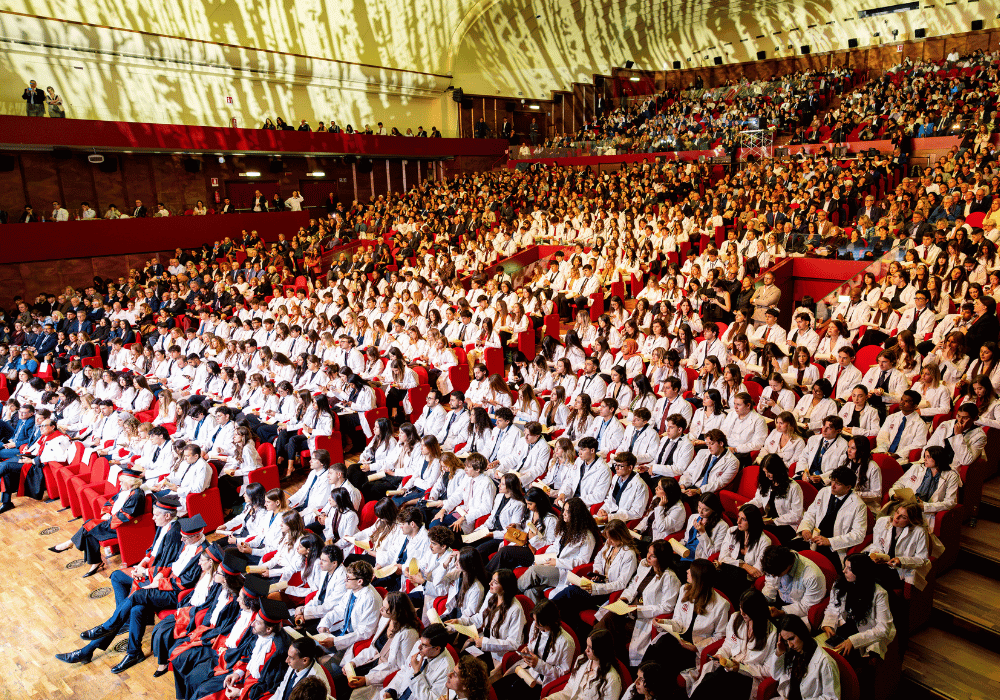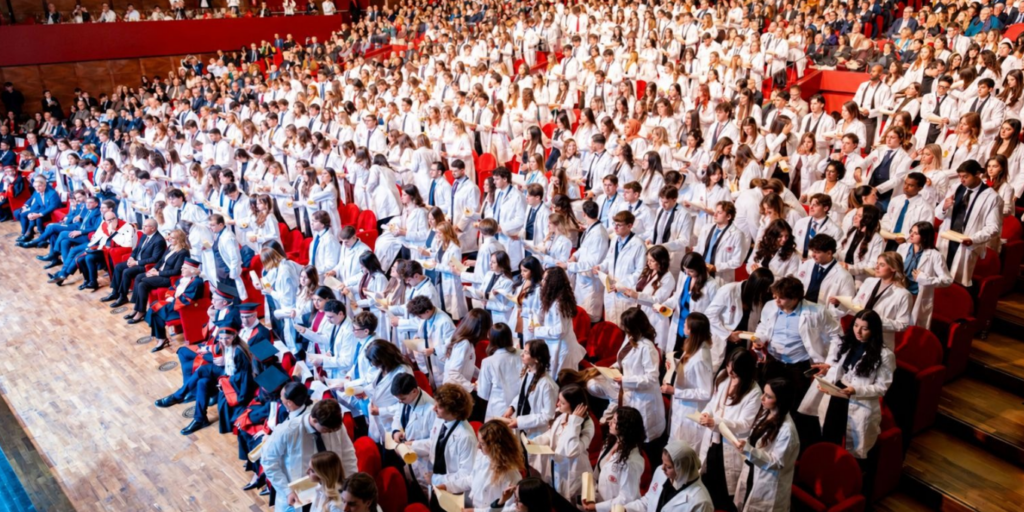
UniCamillus held its White Coat Ceremony at the Auditorium della Conciliazione in Rome, where 400 fourth-year students on the MSc in Medicine and Surgery received their white coats, marking their entry into the clinical placement phase of their training.
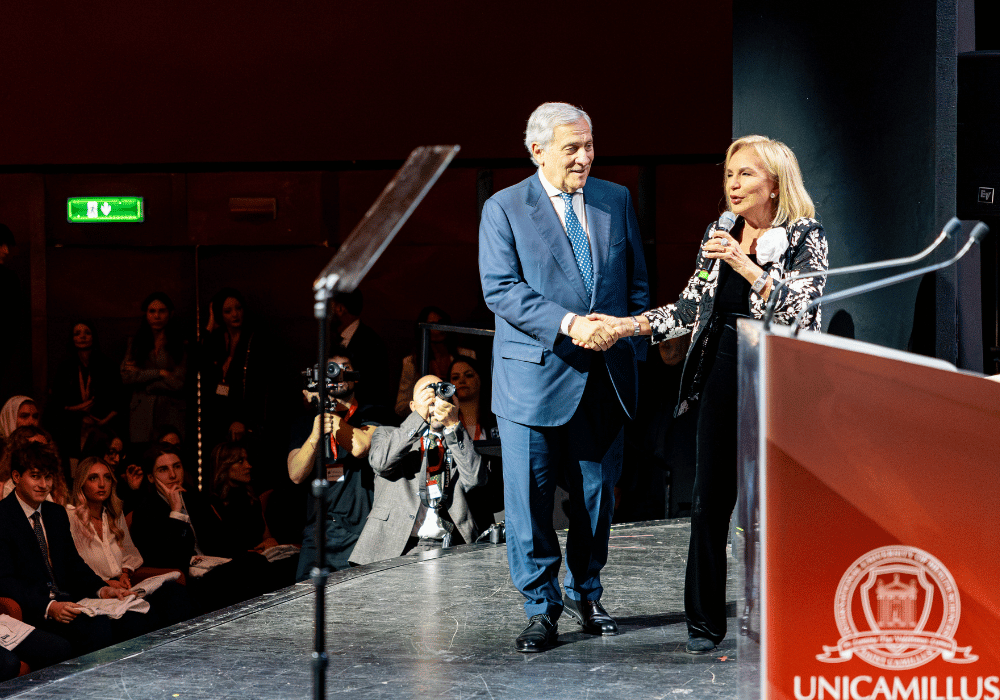
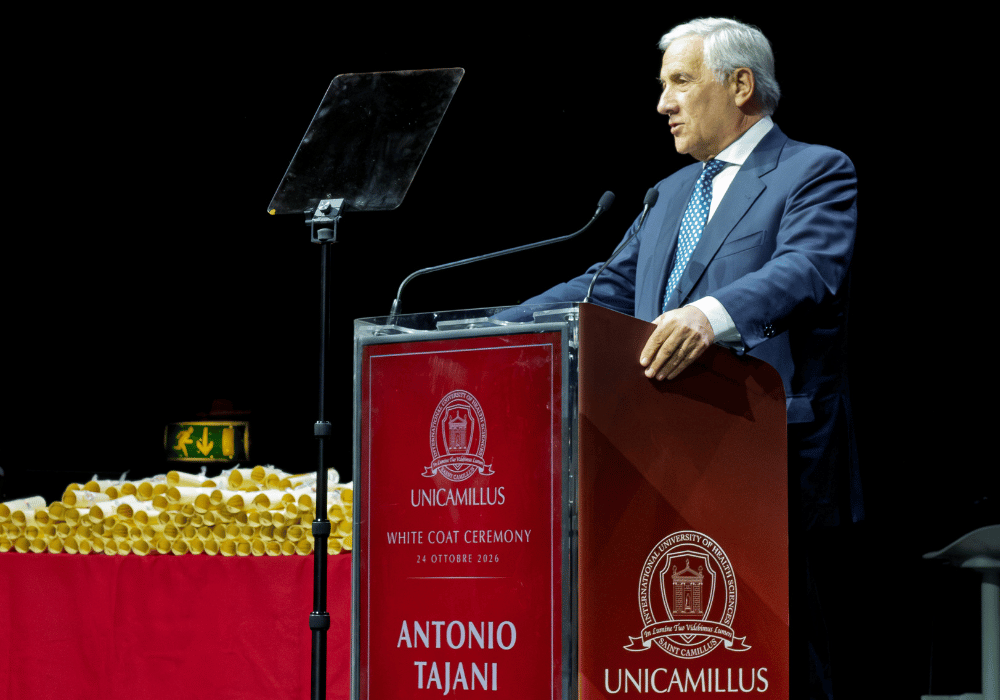
The guest of honour was Deputy Prime Minister and Minister of Foreign Affairs and International Cooperation Antonio Tajani. UniCamillus Rector Gianni Profita thanked Mr Tajani for attending and congratulated the students on the journey they have undertaken and the responsibilities they are preparing to take on.
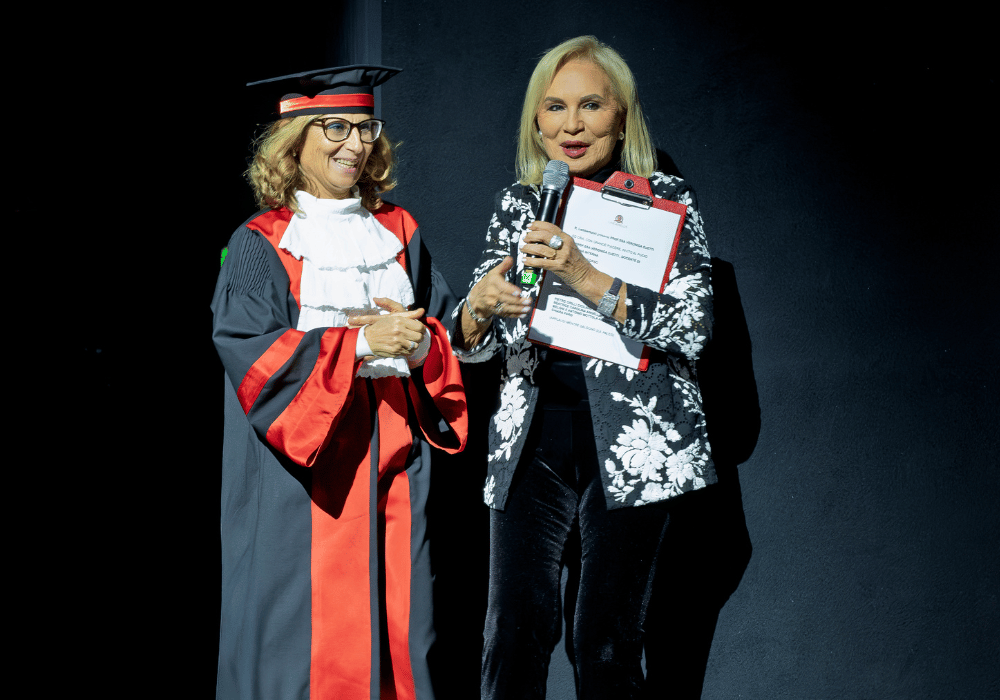
Hosted by Rosanna Lambertucci, the ceremony was attended by Barbara Tavazzi, Dean of the Faculty of Medicine, and Veronica Ojetti, UniCamillus lecturer and clinical tutor at the San Carlo di Nancy Hospital.
During the event, Salvatore Maria Corsello, Vice-Rector of UniCamillus, joined the students in reading the Declaration of Geneva, reaffirming the ethical principles and values underpinning the medical profession. The ceremony also featured a performance by the Carabinieri Band, marking this important milestone in the students’ academic and professional journey.
From theory to practice: the responsibility of care
Speaking about the role of doctors, Deputy Prime Minister Antonio Tajani emphasised the human dimension of the profession: ‘Medicine is not just a science, but also the ability to understand and support people. Technology helps save lives, but it must be guided by the empathy of doctors, who are a point of reference for those who are suffering and looking for answers. We need well-trained doctors who are ready to serve the community, especially in the country’s inland areas, where healthcare must stay close to the most vulnerable. That is why it is important to invest in training and to support young people as they enter the workforce. Italy cannot afford to lose its talent: it would be a moral crime’.
Rector Gianni Profita also highlighted what the ceremony means for the University and the challenges still facing the healthcare system: ‘Today, our students don their white coats and become part of a mission that goes far beyond medicine: caring for people with competence, courage and humanity. This is a moment of great pride for our University, which welcomes an international community drawn from 87 countries and is Italy’s leading provider of medical education in English. Italy’s NHS is among the best in the world, and the commitment of these young doctors will certainly help bring care to where there are the greatest shortages, such as in A&E departments. We need doctors who can listen, understand and leave no one behind. The white coat is a promise of medicine that combines scientific excellence with compassion, because behind every patient there is a person, and behind every treatment lies the chance to restore trust and hope’.
Education, international outlook and social commitment
The education of future medical professionals at UniCamillus combines academic excellence, an international outlook and a focus on people’s needs. The AlmaLaurea 2026 data show that graduates are very satisfied with their programme. In the single-cycle MSc programmes in Medicine and Surgery and in Dentistry, 96.2% of students finish within the standard six years, thanks to a model that supports students from enrolment right through to graduation. UniCamillus is also strongly international: the number of international students is four times the national average.
Alongside their academic training, the University runs initiatives aimed at the most vulnerable members of society. Under an agreement with the Holy See’s Dicastery for the Service of Charity, students of Medicine, Dentistry, Physiotherapy and Nursing can work in the Apostolic Almonry’s clinics, in direct contact with people who are homeless, migrants and families in need: an opportunity to engage with real-world healthcare needs and understand how social conditions affect access to care.
The White Coat Ceremony is part of this journey: for the 400 students who have received their white coats, the start of their clinical placement means taking on the responsibility of recognising patients’ vulnerabilities and caring for every person with humanity.
Browse the Gallery