


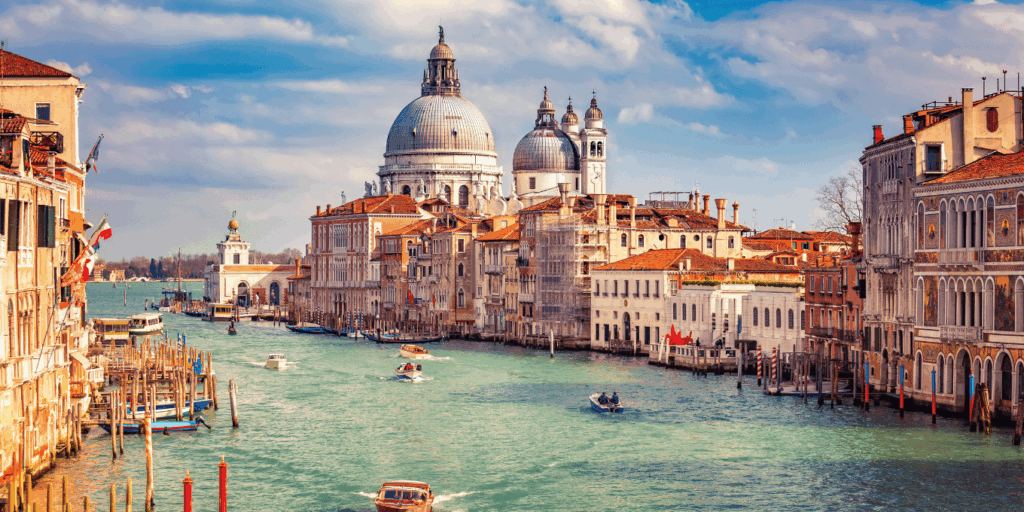
What does it mean to live a long life today? Not simply adding years to life, but rethinking the way we experience the body, memory and relationships between generations. This is the question at the heart of “Time and Care. Dialogues on Longevity Between Medicine, Art and Society,” an event promoted by UniCamillus University, taking place on Friday, 25 September, from 3:00 to 5:00 p.m., at the Venice Arsenal, Hall A, as part of the 61st International Art Exhibition.
Longevity is one of the major transformations of our time, and it concerns far more than medicine: the perception of the body, fertility, memory, relationships between generations and the very meaning of ageing. This is the starting point for the interdisciplinary dialogue proposed by UniCamillus: rather than pursuing a presumed form of immortality, the aim is to understand how the additional years of life can be transformed into years of health, independence and quality of life.
The event is part of the activities of Biennale Sessions, the Venice Biennale project dedicated to the participation of universities, academies and higher education institutions. The event also takes place in the year in which UniCamillus opens its Venice Mestre campus, offering Degree Programmes in Medicine and Surgery and Dentistry and Dental Prosthetics.
The Programme
Following institutional greetings from Gianni Profita, Rector of UniCamillus, and Massimo Zuin, General Director of ULSS 3 Serenissima, the round table “The Changing Body and the Caring Gaze: Health, Art and Memory in Longevity” will take place, moderated by the Rector.
Speakers will include Diego De Leo, President of the Italian Association of Psychogeriatrics and Emeritus Professor of Psychiatry at Griffith University (Australia); Luigi Ferrucci, Scientific Director of the National Institute on Aging (NIH-NIA) and of the Baltimore Longitudinal Study of Aging, Baltimore; Nicola Veronese, Associate Professor of Geriatrics at UniCamillus; Ermanno Greco, Full Professor of Obstetrics and Gynaecology at UniCamillus; Alberto Luca Recchi, explorer, writer and documentary photographer of the Italian seas; and Claudio Strinati, art historian, television presenter and public executive.
“For too long, we have thought of longevity as a problem to be managed,” says Rector Profita. “We believe that, first and foremost, it is an opportunity to be understood: what do we want to do with these additional years? Medicine alone cannot answer this question. That is why we have chosen to bring our scholars here to engage with people who tell the story of time through art, the sea and beauty. It is from this encounter between different perspectives that the right questions emerge.”
“Venice is a city of longevity,” emphasises Director Zuin. “Not only because of its population, which is among the oldest in the country, but also because here longevity becomes beauty: millennia-old buildings acquire greater charm, while ancient decorations become more precious over time. We can discover the secret of Venice and learn to look at old age in people with the same perspective with which we admire this ‘wonderfully old’ city, of which we never tire.”
Dream or Reality?
Living longer does not necessarily mean living better: the real challenge is to gain years of health and independence. Diego De Leo will examine the actual role played by nutrition, physical activity, sleep and prevention, exploring where scientific evidence ends and the myth of eternal youth begins. Ageing well: a dream or, at least to some extent, a reality within reach?
Why the Body Changes with Age
Why does the body eventually stop “keeping pace”? Luigi Ferrucci has led scientific research at the US National Institute on Aging since 2011 and the Baltimore Longitudinal Study of Aging since 2002. With more than 1,700 publications and research that identified the link between chronic inflammation and disability in later life, Ferrucci offers a different perspective on ageing: not an organ that simply wears out, but a balance that progressively loses coordination. The goal is not only to live longer, but also to delay frailty and disability towards the end of life.
Food as Medicine and Memory
For Nicola Veronese, longevity also begins at the table. The Mediterranean Diet is one of the most extensively studied dietary models for the prevention of ageing. But food is more than nutrition: it is memory, identity and relationships. Sharing a meal can help counter isolation and keep dialogue between generations alive. Longevity as an everyday practice combining health and culture.
The Seed Between Matter and Symbol
What is the relationship between longer life expectancy and declining birth rates? Ermanno Greco starts from a paradox: while longevity is increasing, fertility among couples is declining, due both to rising infertility rates and to external factors such as pollution and lifestyle. This is why fertility can be considered an “indicator of civilisation”.
Over the past fifty years, sperm concentration has declined by more than 50%, according to the largest meta-analysis ever conducted on the subject (Levine et al., Human Reproduction Update, 2017 and 2022). Greco will use this finding as a starting point to discuss the “male fertility crisis”. Technology, from cryopreservation to new research, can represent both “poison and cure”.
The Sea as a Laboratory of Nature
What if some of the answers to ageing could be found underwater? For Alberto Luca Recchi, the sea is “an infinite pharmacy”, and its creatures may offer science insights into longevity. This is the perspective of an explorer who has travelled across the Mediterranean with his camera, taking part in expeditions in search of whales, sharks and sperm whales, and co-authoring books with Piero Angela.
When Age Becomes Experience
A young German painter arrives in Venice and is captivated by an old man. The young man is Albrecht Dürer; the old man is Giovanni Bellini. Despite his advanced age, Bellini seems to grow with every new work, and Dürer writes to his friends in Germany with admiration and astonishment. According to Claudio Strinati, this encounter marks the beginning of a new perspective on old age: no longer a period of decline, but a creative stage of life, a vision that extends through Titian and Michelangelo. He will illustrate this through works by Giorgione, who died very young but devoted a significant part of his short artistic career to the subject of later life.
At the end of the afternoon, the floor will go to Donatella Padua, Scientific Coordinator of the event, Associate Professor of Sociology and UniCamillus Delegate for Third Mission and Social Impact, who will bring the day back to its deeper purpose:
“Biennale Sessions represents a valuable opportunity for UniCamillus to enrich the education of future doctors through an authentically interdisciplinary experience: connecting seemingly distant worlds means encouraging students to look at the person beyond the disease, and to understand that culture also contributes to shaping the perspective of those who care for others.”