Women’s health too often reveals the wounds of society before those of the body. There are conditions that do not begin in a doctor’s surgery and do not end with a diagnosis: they first creep slowly into daily life, into silences, into the lack of prevention, into difficulties in accessing care, into the power dynamics that affect the female body long before it becomes a clinical issue.
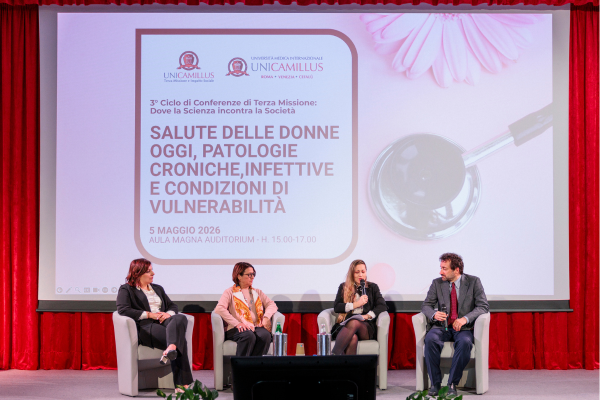
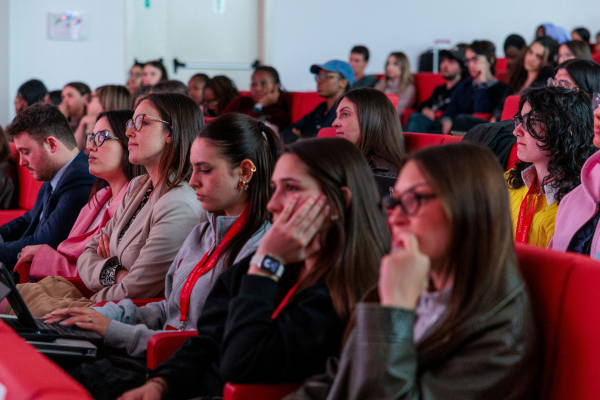
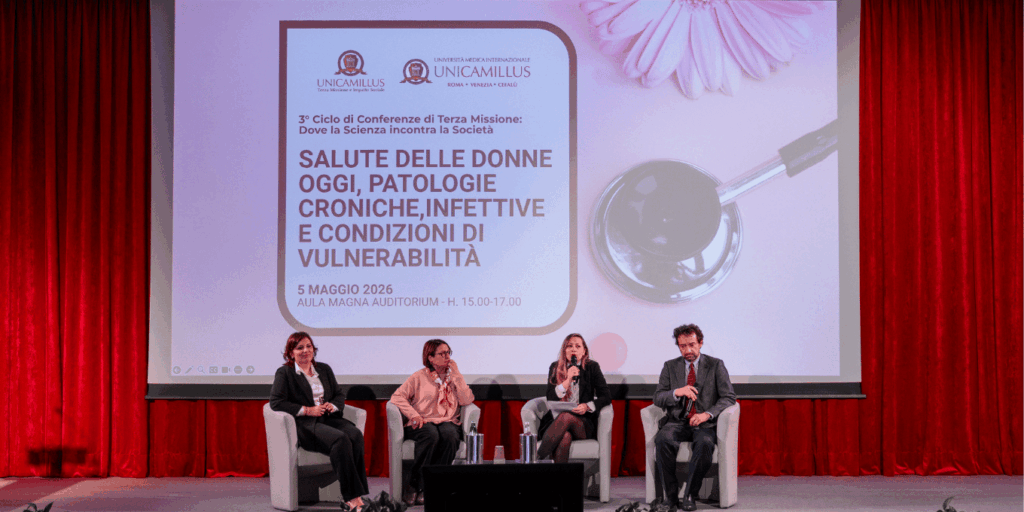
It was precisely to women’s health that UniCamillus University dedicated its conference on 5 May, entitled ‘Women’s Health today: chronic and infectious diseases and conditions of vulnerability’, as part of the University’s Third Mission Lecture Series, with Professor Donatella Padua – Third Mission Delegate – serving as Scientific Coordinator.
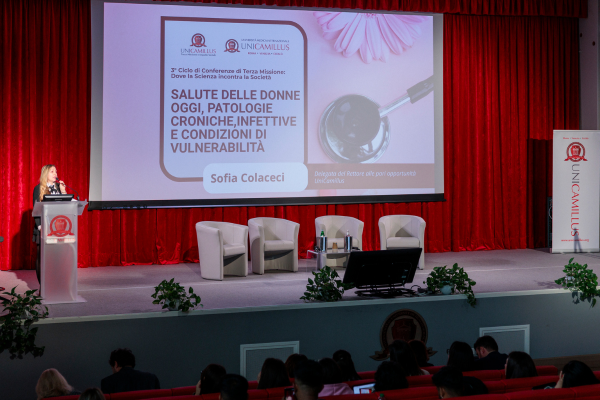
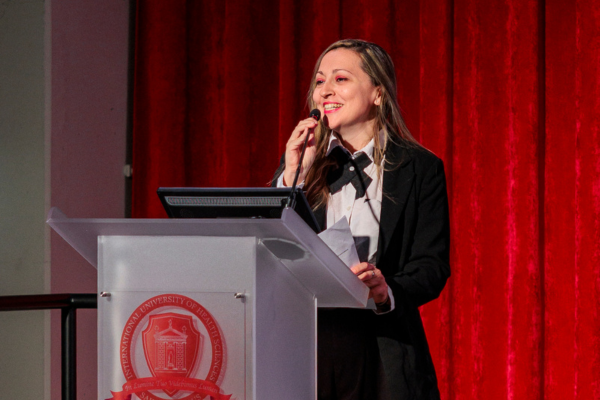
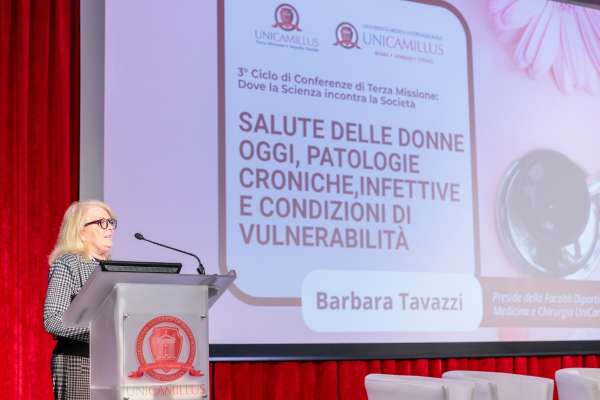
The event opened with institutional greetings from Professor Barbara Tavazzi, Head of the University’s Faculty of Medicine and Surgery, and was moderated by Sofia Colaceci, Rector’s Delegate for Equal Opportunities.
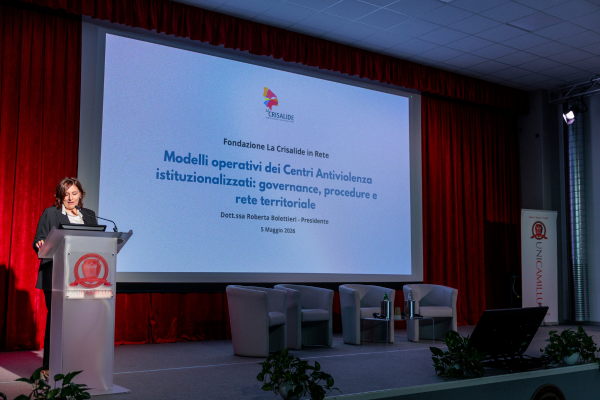
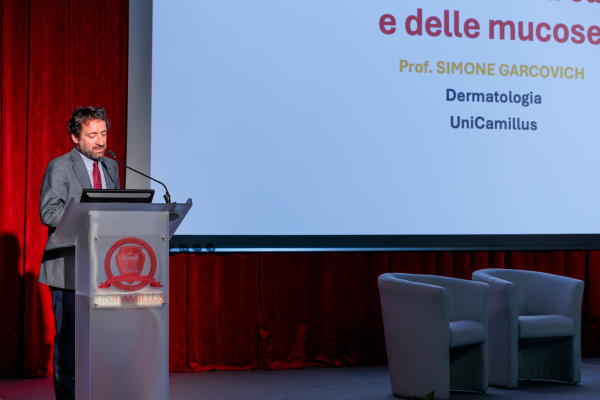
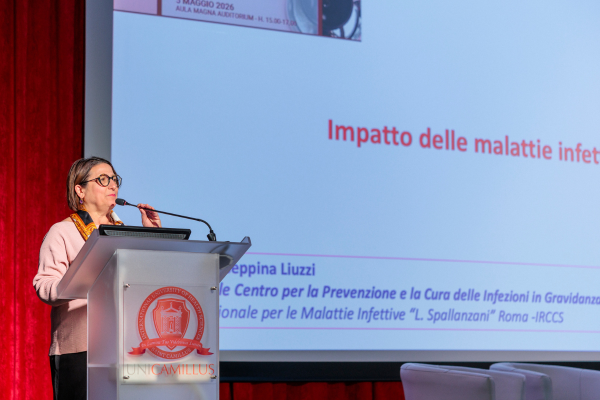
The following experts delivered presentations: Professor Simone Garcovich, Lecturer in Dermatology and Venereology at UniCamillus; Dr Giuseppina Liuzzi, Lecturer in Infectious Diseases at UniCamillus and Head of the Centre for the Prevention and Treatment of Infections in Pregnancy at the “Lazzaro Spallanzani” National Institute for Infectious Diseases; Roberta Bolettieri, Attorney-at-Law and President of the ‘La Crisalide in Rete APS’ Foundation.
Drawing on their diverse clinical and institutional backgrounds, the speakers provided a unified and comprehensive perspective on women’s health as a complex journey in which biological, clinical and social factors are deeply intertwined.
The body speaks: women’s health and social determinants
Chronic inflammatory skin diseases exhibit a clear gender component: in women, they are more frequent or have a more complex clinical course, partly due to the influence of hormonal modulation on the immune system. In particular, the female immune system is more reactive, a characteristic that contributes to a greater predisposition to inflammatory and autoimmune conditions that also affect the skin.
During pregnancy, this vulnerability becomes even clearer. Certain infections, such as cytomegalovirus or toxoplasmosis, can cross the maternal–foetal barrier and affect the baby’s development, with consequences that the scientific literature associates with neurological damage, growth restriction and permanent complications. It is a delicate phase in which prevention is not merely a technical procedure, but an act of protecting the life that is coming into being.
And then there is what is often not visible in clinical data, yet runs through all of it. The World Health Organization (WHO) estimates that one in three women worldwide has experienced physical or sexual violence in her lifetime. In Italy, ISTAT reports that 31.9% of women aged 16 to 75 have experienced at least one episode of violence. These figures point to a widespread condition that is not limited to a temporary injury, but has long-term effects on physical and mental health, influencing gynaecological, dermatological and obstetric care.
It is here that the three levels intersect: the skin as the first signal, pregnancy as a moment of maximum vulnerability, and violence as a condition that can precede and shape everything that follows.
And it is from this awareness that a change of perspective becomes necessary: no longer viewing women’s health as the sum of isolated events, but as something that is built—or compromised—within the way a society protects, listens and intervenes before the body is forced to speak.
The skin: the biological and social language of differences
In his presentation, Professor Garcovich highlighted the skin’s role as a true ‘narrative organ’ of the differences between men and women. “The skin is the body’s largest organ, with barrier, immunological and communicative functions”, he noted, emphasising that it is not a ‘passive surface’ but an active biological system that reflects in real time what is happening inside the body.
This was the starting point and the focus of the discussion: gender medicine as an essential key to understanding skin conditions. “The gender perspective is the first real step towards personalised, patient-centred medicine”, stated the professor, reiterating that the differences between men and women are not marginal but structural, and influence the incidence, severity and therapeutic response of diseases.
The expert recalled the role of genetic, hormonal and immunological factors. Women have a more intense immune response, both innate and adaptive, which on the one hand provides greater protection against certain infections, but on the other increases the risk of autoimmune and inflammatory diseases. In men, however, the immune response tends to be more oriented towards certain inflammatory mechanisms, with different consequences for the clinical presentation of diseases.
Hormones play a particularly central role. Whilst oestrogens improve the skin’s hydration, elasticity and ability to heal, androgens increase sebum production and influence conditions such as acne and disorders of the sebaceous glands. “Hormonal changes in women (puberty, the menstrual cycle, pregnancy, the menopause) profoundly alter the behaviour of skin conditions”, the expert emphasised, highlighting how the skin is a dynamic organ that changes over time and through the stages of life.
Considerable attention was given to chronic conditions, which account for the majority of known dermatological disorders. Adult female acne, hidradenitis suppurativa and lichen sclerosus were described as emblematic examples of conditions whose severity is often underestimated.
Starting with the most common and well-known: acne. “It is by no means a mild condition: in the most severe cases, it can have a significant psychological impact and even compromise the quality of life”, noted Professor Garcovich, thus linking the clinical dimension to the emotional and social aspects. The epidemiological data on adult female acne, with a prevalence of up to 22% among 18- to 40-year-olds, fits into a broader picture of chronic suffering that is often underestimated.
Hidradenitis suppurativa (HS)—a chronic inflammatory skin condition that causes painful nodules, abscesses and fistulas, particularly in areas such as the armpits, groin and under the breasts—with its painful and debilitating course, and lichen—which instead causes itchy lesions—with possible oncological complications, completed the picture of a dermatology that is never just about aesthetics, but about a woman’s daily life.
The concluding message brought everything back to a systemic necessity: many clinical trials do not adequately distinguish between men and women, and this limits the possibility of developing truly personalised therapies.
Pregnancy: between immunological vulnerability and clinical responsibility
Dr Liuzzi’s presentation focused on pregnancy as a phase of profound biological reorganisation, in which the maternal immune system physiologically modulates to allow foetal development, yet simultaneously increases susceptibility to infections.
One of the central aspects concerns the timing of infection. “When dealing with a pregnant woman with an infectious problem, it is essential to understand when the infection was contracted”, emphasised Dr Liuzzi. The first trimester was identified as the most critical phase, as it coincides with embryonic organogenesis: it is during this period that an infection can have the most serious consequences for foetal development.
Rubella has been cited as a success story in public health: in Italy, no indigenous cases have been recorded since 2021. However, it is precisely this outcome that has changed the clinical approach: “Today, screening should no longer be offered as a routine procedure, as it only causes unnecessary anxiety”, explained the lecturer, highlighting how preventive medicine must adapt to epidemiological developments.
Cytomegalovirus was identified as the main congenital infection today. The risk of transmission varies with gestational age: the earlier the infection, the greater the potential harm, although transmission may be more frequent in the third trimester. The introduction of antiviral therapies has marked a turning point, reducing mother-to-foetus transmission by over 60%.
Toxoplasmosis was addressed not only as a clinical issue but also as an educational one, emphasising the importance of dietary and behavioural prevention. Parvovirus B19, which has been on the rise in Europe in recent years, has been linked to complications such as foetal anaemia and hydrops. HIV, on the other hand, has been a prime example of the transformation of medicine: from an infection with a high risk of transmission to a condition that is now almost entirely eliminated in pregnancy thanks to antiretroviral therapy.
Finally, the Zika virus has refocused attention on emerging infections and the globalisation of health risks, with consequences such as foetal microcephaly highlighting just how quickly new pathogens can alter the global clinical landscape.
Professor Liuzzi’s closing remarks reiterated the need for constant vigilance: infectious diseases in pregnancy are a dynamic field, in which prevention, early diagnosis and continuous updating remain essential elements.
Violence and health: the role of the Codice Rosa and victim support
Dr Bolettieri’s presentation shifted the focus of the meeting to the social and institutional sphere, describing gender-based violence not as an isolated incident, but as a progressive process that permeates women’s lives in often layered and invisible forms. “Violence can happen to anyone,” she stated emphatically, underscoring that these are not exceptional situations, but dynamics that can emerge in everyday contexts.
Often, the first step for a woman who has suffered abuse is to turn to a women’s refuge (CAV), a neutral and safe place. It is a place where she can seek help anonymously, but above all, it is part of a wider support system. Unlike a counselling service, the CAV does not merely provide shelter, but activates a structured network involving law enforcement, the judiciary and health services.
A central role has been assigned to emergency protocols. The Codice Rosso, applied within the judicial system in cases of domestic and gender-based violence, ensures an immediate acceleration of investigative procedures and that the victim is interviewed very quickly. The Codice Rosa, on the other hand, which operates in A&E departments, provides a protected healthcare pathway for victims of violence, with dedicated care and the utmost protection of confidentiality. “All you have to say is ‘I’m under the Codice Rosa’ and the woman is placed on a protected pathway”, noted Bolettieri, highlighting the importance of prompt action and immediate protection.
Risk assessment, on the other hand, is carried out using the SARA (Spousal Assault Risk Assessment) model, one of the most widely used tools for assessing the perpetrator’s level of danger and the likelihood of reoffending. The model enables a structured analysis of the history of violence, the perpetrator’s behaviour and the main risk factors, thereby guiding the selection of the most appropriate protective measures for the victim.
At the same time, women’s refuges represent a vital source of protection: these are facilities with a confidential address that guarantee safety and security, offering women a gradual path out of violence through psychological, legal and social support.
Great attention has been paid to the multidimensional nature of violence, which is not limited to the physical aspect but includes psychological, economic and relational dimensions. Even seemingly minor actions can form part of patterns of control and abuse. The system, however, never overrides the woman’s will: the victim’s choice remains central, though it is supported by concrete safety measures.
Dr Bolettieri’s message is clear: violence must not only be combated, but also prevented at a cultural level, through awareness, education and integrated systems of protection.
Gender-specific medicine: a new perspective
It is through dialogue across different levels of care that the key point emerges: women’s health cannot be reduced to a neutral or simplified interpretation. Skin health, pregnancy and the social context are not separate spheres, but merely some of the many dimensions that are intertwined and influence one another.
Biology reveals the differences, clinical practice reveals the complexity, and society determines the consequences. This interplay also encompasses profound factors such as gender-based violence, which directly affects health pathways, access to care and clinical outcomes, making it even clearer that the social dimension cannot be separated from the medical one. And only by recognising this interplay can medicine truly become care.
Gender-specific medicine is not a specialisation, but a perspective. It is what enables us to interpret data more accurately, understand symptoms correctly and choose more effective treatments. But above all, it is what allows us to restore complexity to healthcare, avoiding oversimplifications which, in the case of women, have all too often led to delays, underestimation and inadequate care.
Gallery